
Aloha Is Not a Greeting. It Is a Physiology

Prefer to listen? Press play for the audio version of this article.
The Hawaiian philosophy of full presence and why the neurobiology of genuine encounter is the most underutilised self-care technology available to women
Opening
You have said hello to hundreds of people this year. Colleagues, baristas, other mothers at pickup, the woman at reception who always asks how your week has been. Most of those exchanges lasted three seconds and required nothing of your body. Your heart rate did not change. Your breath did not shift. You were technically present and physiologically elsewhere, already composing the next thing on your list.
Then, somewhere in that same year, something different happened. Someone looked at you, and you felt it in your chest before you understood it in your mind. Your shoulders dropped half a centimetre without you deciding to drop them. Your breath slowed. For a moment, the list disappeared.
That was not a nicer greeting. That was a different physiological event.
Hawaiian culture has a word for it, and the word is older and more precise than most of what contemporary wellness language offers in its place. Aloha. Tourism has flattened it into a word printed on shirts, a friendly wave, a way of saying hello and goodbye in the same breath. The Pukui and Elbert Hawaiian Dictionary, the authoritative reference for the language, records a far wider field of meaning: love, affection, compassion, mercy, sympathy, kindness, and a form of presence that predates any English equivalent (Pukui & Elbert, 1986). One widely cited breakdown of the word traces it to alo, meaning presence or face, and hā, meaning breath or life force. Aloha, read this way, is the presence of shared breath between two people who have actually arrived for each other.
You already know the difference between the two. Your body has known it for years. This article gives you the evidence for what you have already felt.
Evidence Foundation
Genuine encounter is measurable. It shows up in the body as a specific, trackable set of changes, and three independent lines of research, spanning neurobiology, psychology, and cultural science, converge on the same finding: when two people are truly present with each other, their physiology moves toward each other.
The neurobiological case begins with the vagus nerve. Stephen Porges' polyvagal theory describes a social engagement system, a branch of the autonomic nervous system that governs facial expression, vocal tone, eye contact, and the capacity to feel safe in another person's company (Porges, 2011). When this system is active, the body downregulates its threat response and becomes available for connection. When it is not, the nervous system defaults to protection, whether that looks like fight, flight, or the quiet shutdown of simply going through the motions of a conversation. Aloha, understood physiologically, is a description of what happens when the social engagement system is fully online.
The psychological case comes from the study of interpersonal physiological synchrony, the phenomenon in which two people's heart rhythms move into alignment during genuine interaction. Mother and infant pairs show measurable heart rate coordination during face-to-face exchange (Feldman et al., 2011). This is not limited to caregiving relationships. A large recent field study monitoring 72 participants across multiday real-world trips found that heart rate synchrony reliably increased when people were in close physical proximity, was significantly stronger between socially familiar pairs than strangers, and rose sharply during face-to-face group interaction while remaining flat during dispersed, unengaged gatherings (He et al., 2026). A separate study of group settings found that interpersonal physiological synchrony directly predicted the degree of cohesion a group reported feeling (Tomashin et al., 2022). Presence, in other words, is not a metaphor for connection. It is the mechanism of it.
The third line of evidence is neuroendocrine. Oxytocin, the peptide most associated with bonding, calm, and the down-regulation of stress reactivity, is released through positive social interaction and through skin contact, warmth, and affiliative touch (Uvnäs Moberg, 1998; Uvnäs Moberg, Handlin, & Petersson, 2020). Sustained oxytocin release is associated with reduced activity in the body's stress axis and increased capacity for the kind of calm, open attention that full presence requires (Uvnäs Moberg & Petersson, 2022). This is the physiological loop underneath what Hawaiian philosophy named centuries before Western endocrinology had the instruments to measure it.
Three disciplines. One finding. When you are met with genuine presence, your autonomic nervous system recognises it as safety, your heart rhythm moves toward coordination with the other person, and your body releases the chemistry of calm. Aloha is not sentiment. It is what happens in a regulated nervous system meeting another regulated nervous system.
Depth Layer
Here is what this means for you, specifically, if you have spent the better part of two decades being excellent at appearing present.
You have almost certainly become highly skilled at the performance of connection. Eye contact on cue. The right facial expression. Questions asked at the right moment. This is not a criticism. It is often what competence and achievement require of a woman who has built a life through capability. But performed presence and genuine presence are physiologically different events, and your nervous system knows the difference even when the person across from you does not.
This is also the quiet cost of pure individualism, the cultural inheritance most women in your position have absorbed without ever agreeing to it. Individualism prizes self-sufficiency so completely that dependence on genuine connection with another person can start to feel like an inefficiency, or worse, a vulnerability. You learn to be reliably fine on your own. You learn that your own regulation is your own responsibility, full stop. There is real strength in that capacity. But the research above says something that pure self-sufficiency cannot account for: co-regulation, the settling of one nervous system in the presence of another regulated nervous system, is not a workaround for a poorly regulated person. It is a biological capacity built into every human nervous system, including yours (Porges, 2011). Needing it is not a gap in your independence. It is a feature of being a mammal with a vagus nerve.
Hawaiian philosophy never separated the individual from the collective in the way that Western individualism does. Aloha is described in the literature as the essence of relationships, mutual regard extended with no requirement of anything in return, a framework in which each person's wellbeing is bound up with everyone else's (Hawaii Revised Statutes § 5 7.5, 1986). This is not a soft, sentimental add-on to a capable life. It is closer to an infrastructure decision. A woman who has genuine presence available to her, and who offers it in return, is drawing on a form of nervous system regulation that self-sufficiency alone cannot supply.
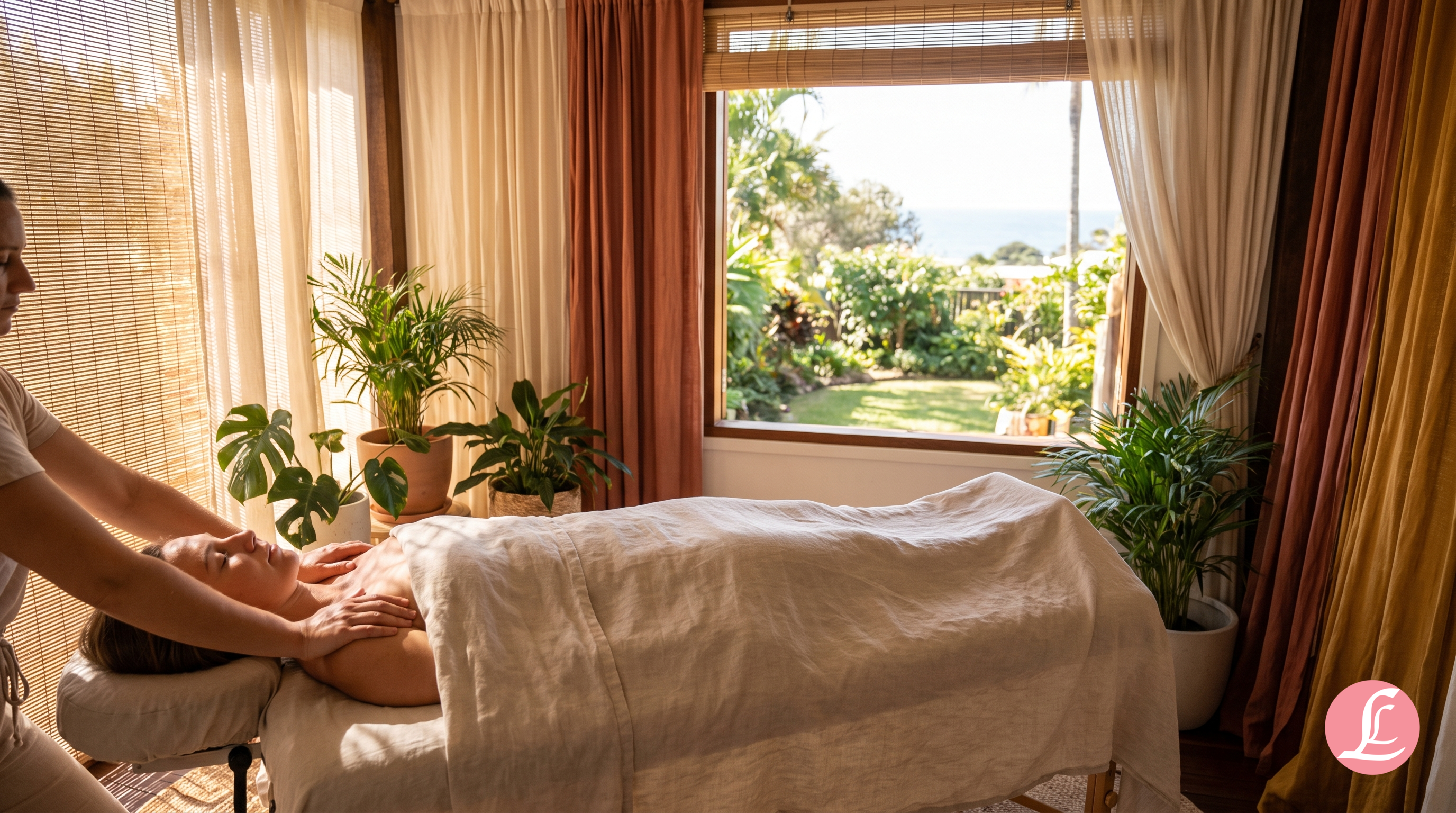
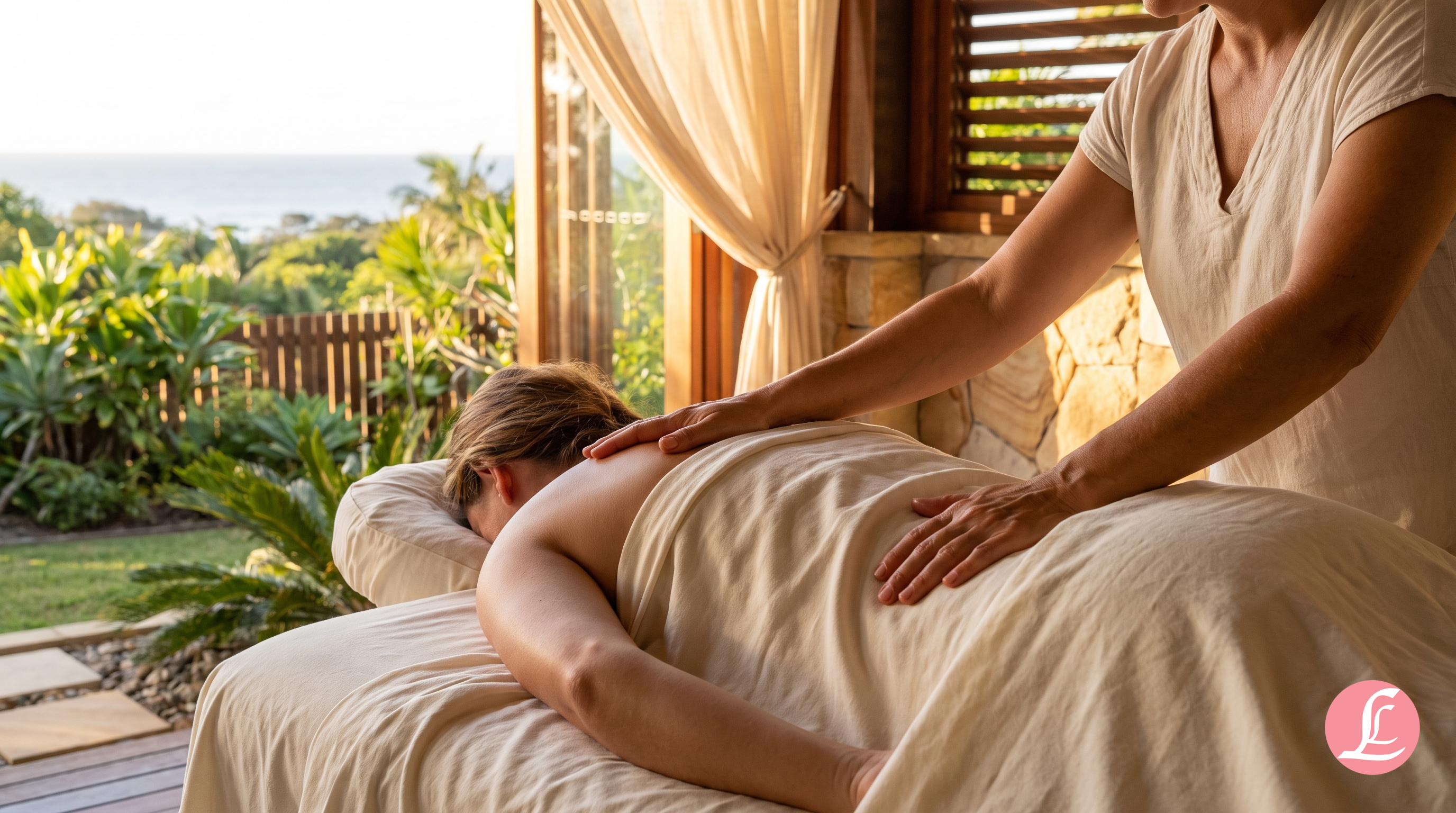
This is also where Lomi Lomi becomes relevant, not as a luxury but as a specific application of this same physiology. The relational field between practitioner and client, discussed further in Article 12's exploration of why women heal better together, and the quality of rightness in relationship known as pono, explored fully in Article 20, both draw on the same co-regulatory mechanism described here. Full presence, wherever it occurs, whether on a table or across a kitchen table with someone you love, is doing the same physiological work.
The Living Practice: The Aloha Breath Exchange
This is a two-person practice. It requires a trusted person, roughly five minutes, and no equipment.
Sit facing each other, close enough that your knees could touch if you leaned forward, though touching is not required. Decide who will begin as the receiver and who will begin as the giver.
The giver holds soft, steady eye contact and breathes at a slow, natural pace, in for a count of four, out for a count of six. The receiver simply receives this presence without needing to perform anything in return, no forced smile, no conversation, no managing of the moment. Continue for two full minutes.
Then swap roles and repeat for two minutes.
While you do this, notice three things in your own body. Whether your breath rate shifts to match a slower pace. Whether your shoulders drop. Whether the quality of your attention changes from monitoring the room to genuinely being in the room. These are the observable markers of the physiology described above. You are not imagining the shift. You are tracking oxytocin release, vagal engagement, and the early stage of heart rate coordination in real time, using nothing but your own attention.
Practise this once a week with the same person, or with a rotating cast of people you trust. Over a month, you will likely notice the shift arriving faster and settling deeper. That is not a coincidence. That is a nervous system remembering what it is capable of.
Closing Invitation
You have spent a long time being the regulated one. The person others come to when they need to feel steadier. That capacity is real, and it deserves respect. It has also, quite possibly, left you managing your own nervous system alone more often than your biology actually requires.
You do not need to abandon your independence to accept this. You simply need to recognise that full presence, given and received, is not indulgence. It is the technology your body was already built to use.
If this is a physiology you would like to build with other women who understand exactly this kind of capable tiredness, the Aloha Circle gathers fortnightly for precisely this purpose, in the company of women who have arrived at the same recognition you have just arrived at. Reserve Your Place at the Aloha Circle
References
Feldman, R., Magori Cohen, R., Galili, G., Singer, M., & Louzoun, Y. (2011). Mother and infant coordinate heart rhythms through episodes of interaction synchrony. Infant Behavior and Development, 34(4), 569 to 577.
Galbusera, L., Finn, M. T. M., Tschacher, W., & Kyselo, M. (2023). Interpersonal synchrony feels good but impedes self regulation of affect. Scientific Reports, 13.
Hawaii Revised Statutes § 5 7.5 (Aloha Spirit). (1986). Hawaii State Legislature.
He, H., Christensen, J. H., Sørensen, A. J. M., & Konvalinka, I. (2026). Heart rate synchrony as a marker of real world social engagement. PNAS Nexus, 5(6), pgag181.
Konvalinka, I., Xygalatas, D., Bulbulia, J., Schjødt, U., Jegindø, E. M., Wallot, S., Van Orden, G., & Roepstorff, A. (2011). Synchronized arousal between performers and related spectators in a fire walking ritual. Proceedings of the National Academy of Sciences, 108(20), 8514 to 8519.
Porges, S. W. (2011). The polyvagal theory: Neurophysiological foundations of emotions, attachment, communication, and self regulation. W. W. Norton.
Pukui, M. K., & Elbert, S. H. (1986). Hawaiian dictionary: Hawaiian English, English Hawaiian (Rev. ed.). University of Hawaii Press.
Tomashin, A., Gordon, I., & Wallot, S. (2022). Interpersonal physiological synchrony predicts group cohesion. Frontiers in Human Neuroscience, 16, Article 903407.
Uvnäs Moberg, K. (1998). Oxytocin may mediate the calming and curative effects of social interaction. Psychoneuroendocrinology, 23(8), 819 to 835.
Uvnäs Moberg, K., Handlin, L., & Petersson, M. (2020). Neuroendocrine mechanisms involved in the physiological effects caused by skin to skin contact. Infant Behavior and Development, 61, Article 101482.
Uvnäs Moberg, K., & Petersson, M. (2022). Physiological effects induced by stimulation of cutaneous sensory nerves, with a focus on oxytocin. Current Opinion in Behavioral Sciences, 43, 159 to 166.